
5 Common Golf Ball Mistakes Beginners Make and How to Avoid Them
Why Your Golf Ball Choice Matters More Than You Think
When you first start playing golf, your attention naturally goes to the clubs. You wonder which driver is most forgiving or which putter feels right. The golf ball, however, often becomes an afterthought. It’s just a small white ball, right? But the market is filled with options designed for professionals, with terms like "compression" and "spin rate" that can feel intimidating. These common golf ball mistakes can slow your progress without you even realising it.
The truth is, the right ball can make a significant difference in your game, helping you hit farther and straighter while building confidence. This article will guide you through five frequent errors beginners make when choosing a golf ball and provide simple, practical solutions. Understanding your equipment is a fundamental part of learning how to play golf, and that starts with the ball you put on the tee.
Mistake 1: Using a Ball with the Wrong Compression for Your Swing
One of the most common technical terms you'll encounter is golf ball compression. Think of it like a spring or a small trampoline. When you hit the ball, it squashes against the clubface and then springs back, launching into the air. A high-compression ball is like a very stiff spring; it requires a lot of force, or a fast swing speed, to compress it fully and get maximum distance.
Many beginners grab the same firm balls used by tour pros, not knowing these are designed for swing speeds of over 100 mph. If your swing is slower, you won't be able to activate the core properly. This results in a loss of distance and a harsh, unpleasant feel at impact. The solution is simple: start with a low-compression ball. These softer balls are designed to compress easily at slower swing speeds, ensuring you get the most energy transfer, more distance, and a much better feel off the clubface.
Mistake 2: Choosing a High-Spin Ball That Hurts Your Drives
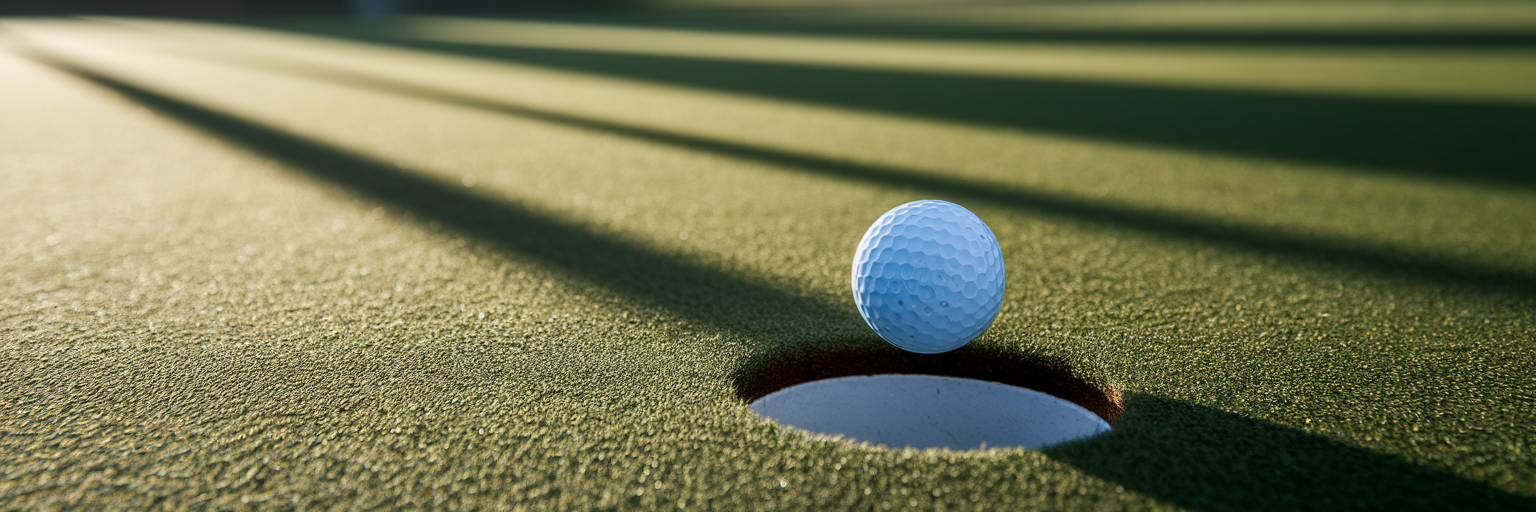
Spin is another critical factor, but it has two very different effects. Backspin is what helps your iron and wedge shots stop quickly on the green, which is a good thing. Side-spin, however, is what causes those frustrating slices and hooks that send your ball into the trees. For a beginner, excessive side-spin is the enemy of consistency.
The mistake here is falling for the marketing of premium, high-spin balls. While they offer incredible control around the greens for skilled players, they also magnify any flaws in a beginner's swing off the tee. A small swing imperfection can turn into a massive slice. The clear solution is to opt for low spin golf balls. These are typically two-piece balls engineered specifically to reduce side-spin, helping you produce a straighter and more predictable ball flight. Keeping the ball in play is key to building confidence and enjoying your round.
Mistake 3: Ignoring Feel and Performance Around the Green
While distance off the tee is exciting, a huge portion of your strokes as a beginner will happen within 100 yards of the hole. A common error is choosing a ball based only on its promised driver distance while completely ignoring how it performs for chipping, pitching, and putting. This is where the concept of "feel" comes in. A ball with a softer cover, like one made from ionomer, provides better feedback and control for the delicate shots required in the short game.
A hard, "clicky" ball might fly far, but it can be difficult to judge distance on a chip or feel the speed on a putt. The goal is to find a ball that offers a good balance between distance and control. As many experts featured on platforms like Golf.com explain, testing a ball's short-game performance is essential. You need a ball that feels responsive and helps you manage your shots around the green, where you can truly lower your scores. The table below breaks down these trade-offs.
| Feature | Distance-Focused Ball (Hard Cover) | Feel-Focused Ball (Soft Cover) | Ideal Beginner Ball (Balanced Design) |
|---|---|---|---|
| Feel off Putter | Firm, clicky | Soft, responsive | Soft yet solid |
| Spin on Drives | Low | Medium to High | Low to Medium |
| Control on Wedges | Lower (tends to roll out) | Higher (stops quicker) | Good (predictable roll) |
| Forgiveness | High | Lower | High |
| Primary Benefit | Maximises distance | Maximises short-game control | A blend of distance and control |
Note: This table illustrates general performance traits. An 'Ideal Beginner Ball' typically combines a low-compression core for distance with a soft cover for feel, offering the best of both worlds for developing players.
Mistake 4: Playing with Overly Complex Multi-Layer Balls
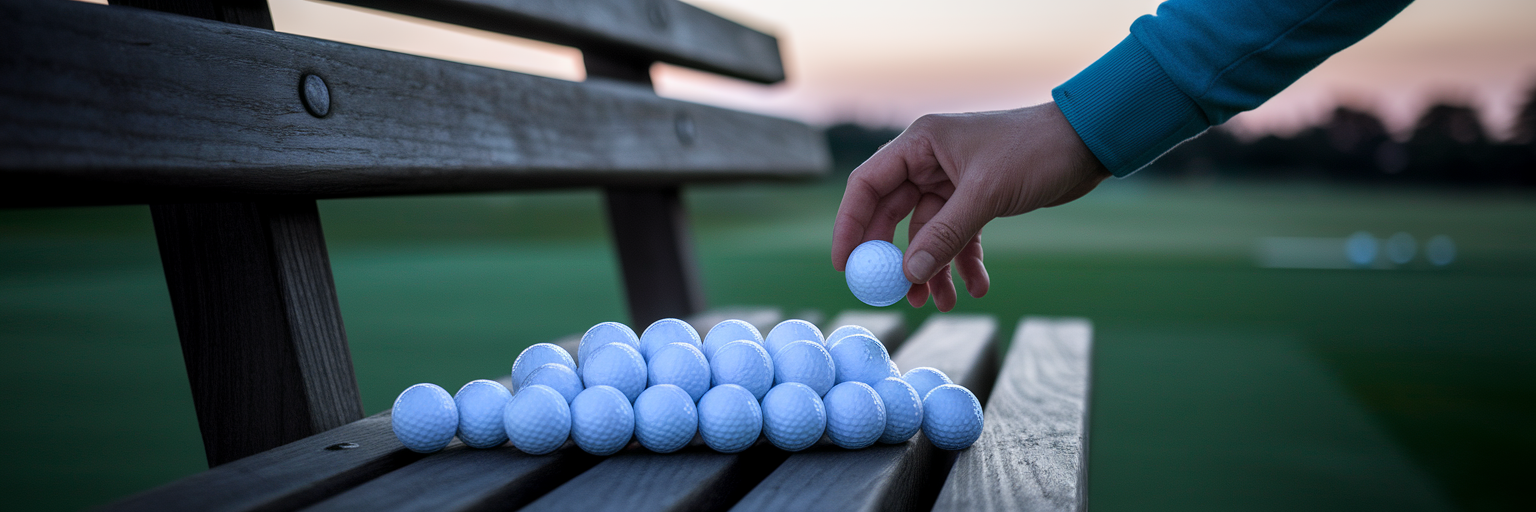
You may have heard of 3-piece, 4-piece, or even 5-piece golf balls. Their complex, multi-layer construction is an engineering marvel designed for highly skilled players. These golfers can control their swing with such precision that they can use different layers of the ball to produce specific spin rates and trajectories on demand. For a beginner, however, this complexity often leads to inconsistent results.
Off-centre hits are a normal part of learning, and with a multi-layer ball, these mishits can produce unpredictable outcomes. The advanced technology provides no real benefit and can even be a hindrance. The solution is to embrace simplicity with a two-piece ball. Its straightforward construction, a single large core and a cover, offers maximum forgiveness and predictable performance. This consistency is exactly what you need to build a reliable, repeatable golf game.
Mistake 5: Overpaying for Premium Balls You Don't Need
It is tempting to buy the same expensive, tour-level balls you see your favourite professionals use on television. Marketers do a great job of making you feel like a better ball will instantly make you a better player. The reality is that the subtle performance benefits of these premium balls are virtually unnoticeable for players with developing swings and slower speeds. The high cost simply does not translate into lower scores for a beginner.
The solution is to be practical and budget-conscious. Seek out the best golf balls for beginners, which are specifically designed for your skill level and offer excellent all-around performance at a fraction of the price. This makes the game more enjoyable and less stressful. Losing a ball is a normal part of learning, and it feels a lot better when it is not a five-dollar bill disappearing into the woods.
Finding Your Perfect Match and Building Confidence
Now that you know what to look for, how do you find the right ball? The best way is to test a few options. Instead of committing to a full dozen, follow this simple plan:
- Buy a sleeve (3 balls) of two or three different models that fit the recommended criteria: low-compression and two-piece construction.
- Take them to the practice green. Hit some putts and short chips to see how each one feels off the clubface. Do you prefer a softer or firmer feel?
- Head to the driving range or the course. Hit some shots and observe the ball flight and distance. Look for a ball that flies straight and gives you consistent results.
Pay attention to the overall feel, trajectory, and consistency. Once you find a ball that works well for you, stick with it. Using the same ball every time you play eliminates a major variable and allows you to focus on what truly matters: improving your technique. This simple step is a huge part of learning how to play golf with confidence. By making a smarter choice, you set yourself up for a more enjoyable and rewarding journey on the course.






 English
  German