

Choosing the Right Golf Shoes for Any Weather
Your Shoes Are the Foundation of Your Swing
Your golf shoes are the only part of your equipment that physically connects you to the ground. This connection is the foundation for balance, power, and consistency in every swing. While it might be tempting to wear a standard pair of trainers, they are designed for forward motion, like running or walking. Golf shoes, on the other hand, are engineered specifically for the rotational forces of a golf swing.
They typically feature a wider base for enhanced stability, preventing you from swaying as you swing. The traction patterns are not random; they are designed to grip the turf during your rotation, giving you a solid anchor. Furthermore, they provide crucial lateral support to stop your foot from rolling, a common issue that can lead to inconsistent shots and even injury. As an analysis from golf.com highlights, the right shoes are a measurable performance factor.
For beginners, this stability also helps reduce fatigue over a long round of 18 holes. Understanding how to choose golf shoes is not about fashion, but about function. It is a fundamental step toward building a confident and repeatable swing as you learn how to play golf.
Spiked vs. Spikeless: A Beginner’s Guide
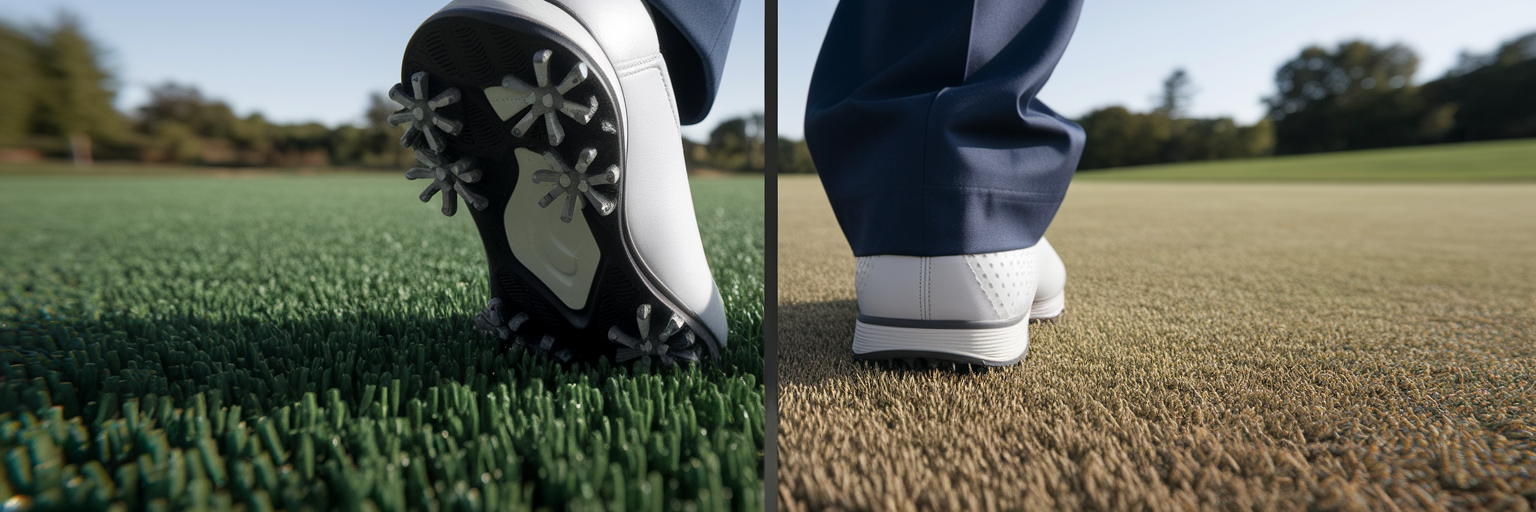
When you start shopping, you will quickly notice two main categories: spiked and spikeless. The choice between spiked vs spikeless golf shoes used to be simple, but technology has blurred the lines. Let's break down the basics so you can make a clear choice.
Spiked golf shoes have removable cleats, or "spikes," on the sole. These are designed to dig into the turf to provide maximum grip. They are the traditional choice for golfers playing on soft, wet, or hilly courses where slipping is a real concern. The added traction gives you an incredibly stable base, which is a huge confidence booster when you need to commit to a powerful swing.
Spikeless golf shoes feature a sole with small rubber studs or dimples instead of removable cleats. Their biggest advantages are comfort and versatility. They feel much more like a comfortable trainer and can often be worn straight from your car to the course and even into the clubhouse afterward. A common myth is that spikeless shoes lack grip, but modern designs offer outstanding traction that, as noted in a PGA TOUR Superstore guide, rivals spiked shoes in most dry to damp conditions.
| Feature | Spiked Golf Shoes | Spikeless Golf Shoes |
|---|---|---|
| Traction | Maximum grip with cleats | Excellent grip with rubber studs |
| Best For | Wet, soft, or hilly courses | Dry, firm courses and walking |
| Versatility | On-course use only | Can be worn on and off the course |
| Comfort | Generally heavier and more rigid | Lighter, more flexible, like a trainer |
| Course Impact | Can leave marks on greens | Gentler on putting surfaces |
This table summarizes the core differences. Beginners should use this as a quick reference to decide which type best fits their typical playing conditions and comfort preferences.
Matching Your Footwear to the Forecast
Just as you check the weather to decide if you need a jacket, you should consider the forecast when choosing your golf shoes for the day. The right pair will not only keep you comfortable but also ensure your footing is secure, no matter what the weather brings.
Playing in Wet Conditions (Rain, Morning Dew)
For rounds with rain in the forecast or early morning tee times on dewy grass, waterproof golf shoes are essential. Look for shoes with a built-in waterproof membrane that blocks moisture while allowing your feet to breathe. In these soggy conditions, spiked shoes are your best friend. The cleats provide superior traction on wet turf, preventing slips during your swing. As shown in a Golf Digest roundup, there is a wide variety of models engineered specifically for these conditions.
Handling Hot and Dry Conditions
On a hot, sunny day, your priority should be breathability. Heavy, non-breathable shoes can make your feet feel tired and swollen by the back nine. For these conditions, lightweight spikeless shoes with mesh uppers are an excellent choice. They allow air to circulate, keeping your feet cool and dry. This enhanced comfort helps reduce overall fatigue, allowing you to stay focused on your game.
Staying Comfortable in Cold and Wind
When playing in the cold, your goal is to retain heat and stay dry. Look for insulated, waterproof shoes that protect your feet from the elements. These shoes often have a slightly thicker construction to keep the cold out. It is important to understand the trade-off: shoes designed for maximum waterproofing might be less breathable than their warm-weather counterparts. Choose based on your local climate and whether you prioritize staying dry over having maximum airflow.
- Wet Weather: Spiked, waterproof shoes.
- Hot Weather: Spikeless, breathable mesh shoes.
- Cold Weather: Insulated, waterproof shoes.
Modern Features to Look For
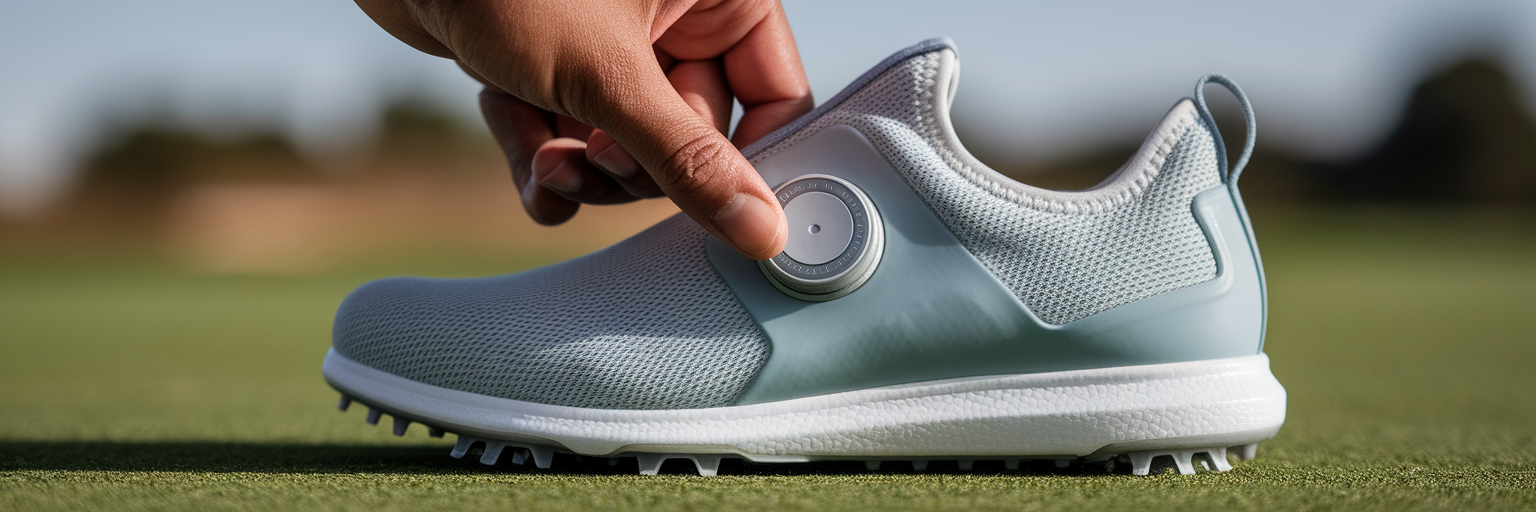
Golf shoe technology has come a long way. Beyond the spiked or spikeless debate, several modern features can significantly improve your comfort and performance. Knowing what to look for will help you make a more informed decision.
- Innovative Fitting Systems: Traditional laces are being challenged by new technology. The BOA Fit System, for example, uses a micro-adjustable dial to tighten thin cables. This provides a precise, secure fit that will not loosen during your round. It is a fantastic feature for getting a locked-in feel every time.
- Advancements in Materials: Many modern shoes use ultra-lightweight mesh and synthetic uppers. These materials make for incredibly comfortable golf shoes that reduce foot fatigue, which is a huge benefit for players who prefer to walk the course.
- Smart Outsole Design: Today’s outsoles are more than just platforms for spikes. They are often engineered with specific zones for stability and flexibility, and many feature channels designed to move water away from the foot to maintain grip in damp conditions.
These innovations are becoming more common, especially as players prioritize all-weather performance. In fact, Golf Monthly reported a significant sales increase for fully sealed, waterproof models, showing a clear trend toward shoes that can handle any condition.
Making a Smart First Purchase
With all the options available, choosing your first pair can feel like a big decision. Let’s simplify it. Your goal is to find a shoe that fits your foot, your climate, and your budget. Prices can range from under $100 to over $200, but you do not need the most expensive pair to get started. A solid, mid-range waterproof shoe is often the most versatile and wisest investment for a beginner.
Above all, prioritize comfort and fit. Here is a practical tip: try on shoes in the afternoon or evening. Your feet naturally swell throughout the day, and you should wear the same type of socks you would wear on the course. Walk around the store and mimic your swing stance to feel for any pinching or slipping. The best golf shoes for beginners are not about a specific brand; they are the ones that feel stable and comfortable on your feet.
Think of your first pair of golf shoes as an exciting investment in your enjoyment of the game. The right footwear gives you the stability to swing with confidence and the comfort to walk 18 holes with a smile. It is a key piece of equipment that will support you every step of the way as you learn how to play golf.



 English
  German