
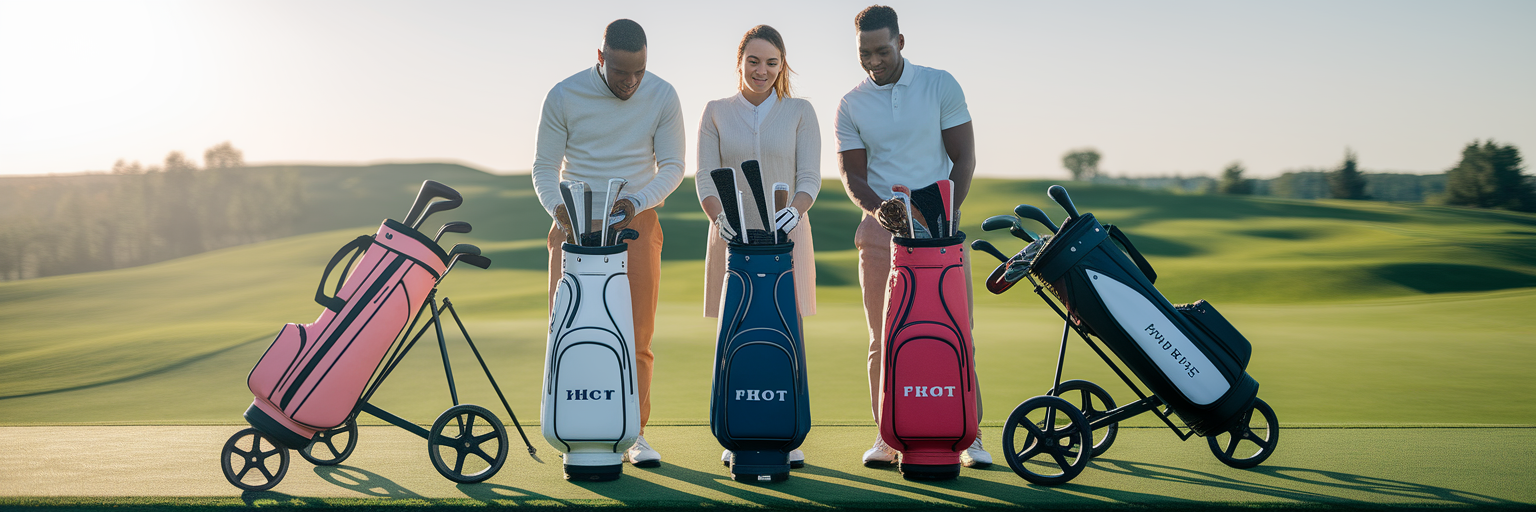
How to Choose the Best Golf Bag for Beginners
Why Your First Golf Bag Matters More Than You Think
Your first golf bag is more than just a place to store your clubs. Think of it as your mobile base of operations on the course, a piece of equipment that directly influences your comfort, organisation, and even your confidence. It might seem like a minor detail, but as golfplayerhub.com notes, a report from the National Golf Foundation found that a significant number of amateur golfers say their bag choice directly affects their enjoyment of a round. A heavy, awkward bag can cause fatigue before you even reach the back nine, while a disorganised one can slow you down and add unnecessary stress.
The right bag keeps your gear exactly where you need it, helping you focus on your swing instead of searching for a tee. The goal of this guide is to help you find a bag that aligns with how you want to learn how to play golf, proving that the best choice is personal, not just the most expensive one.
Carry, Push, or Ride? Your First Big Decision

Before you even look at a single bag, ask yourself a simple question: how will you get around the course? Your answer is the most important factor in this decision. Many beginners dream of walking the fairways, and if you plan to carry your own clubs, you will need a bag designed for exactly that. This means prioritising a lightweight frame and comfortable, padded shoulder straps to prevent strain over four hours of play. Your shoulders will thank you.
Alternatively, you might prefer to walk but use a push or pull cart. In this case, weight is less of a concern, but you will want a bag with a sturdy base that sits securely on the cart. Easy access to all pockets while the bag is strapped in becomes essential. Finally, if you plan to ride in a motorised cart most of the time, your needs are similar to those of a push cart user. The bag must be stable and have forward-facing pockets so you can grab what you need without a struggle. Many new players are "hybrid" golfers, doing a bit of everything, so considering this flexibility from the start is a smart move.
A Closer Look at the Main Types of Golf Bags
Now that you have an idea of how you will move around the course, let's explore the bags built for each style. Understanding the core differences will make your choice much clearer. The main debate for many beginners is the stand bag vs cart bag decision. As experts at Golf Monthly explain, the choice often comes down to whether you prioritise minimal weight for walking or maximum storage for riding.
Stand Bags: The Walker’s Choice
These are the go-to for golfers who carry their clubs. Their defining feature is a built-in leg mechanism that pops out when you set the bag down, keeping it upright and off wet ground. They are designed to be as light as possible and typically feature dual shoulder straps, like a backpack, to distribute weight evenly.
Cart Bags: The Rider’s Solution
Cart bags are built for stability and storage. They are generally larger and heavier than stand bags, with a solid, flat base designed to sit securely on a push cart or in a motorised buggy. All the pockets are usually forward-facing, making it easy to access your gear when the bag is strapped in.
Hybrid Bags: The Best of Both Worlds
A growing category, hybrid bags attempt to offer a compromise. They are lighter than a traditional cart bag but offer more storage and sturdier construction than a typical stand bag. They have both retractable legs for walking and features like a cart-strap channel to secure them firmly for riding, offering great versatility.
| Bag Type | Primary Use | Key Features | Best For Beginners Who... |
|---|---|---|---|
| Stand Bag | Walking & Carrying | Lightweight, dual straps, retractable legs | Plan to walk the course most of the time. |
| Cart Bag | Riding or Push Cart | Ample storage, forward-facing pockets, sturdy base | Will almost always use a push cart or ride in a buggy. |
| Hybrid Bag | Walking or Riding | Lightweight frame with extra storage, cart-strap channel | Want the flexibility to walk or ride without switching bags. |
This table summarises the core differences to help you quickly identify which bag type aligns with your intended playing style.
Essential Features for Your First Bag
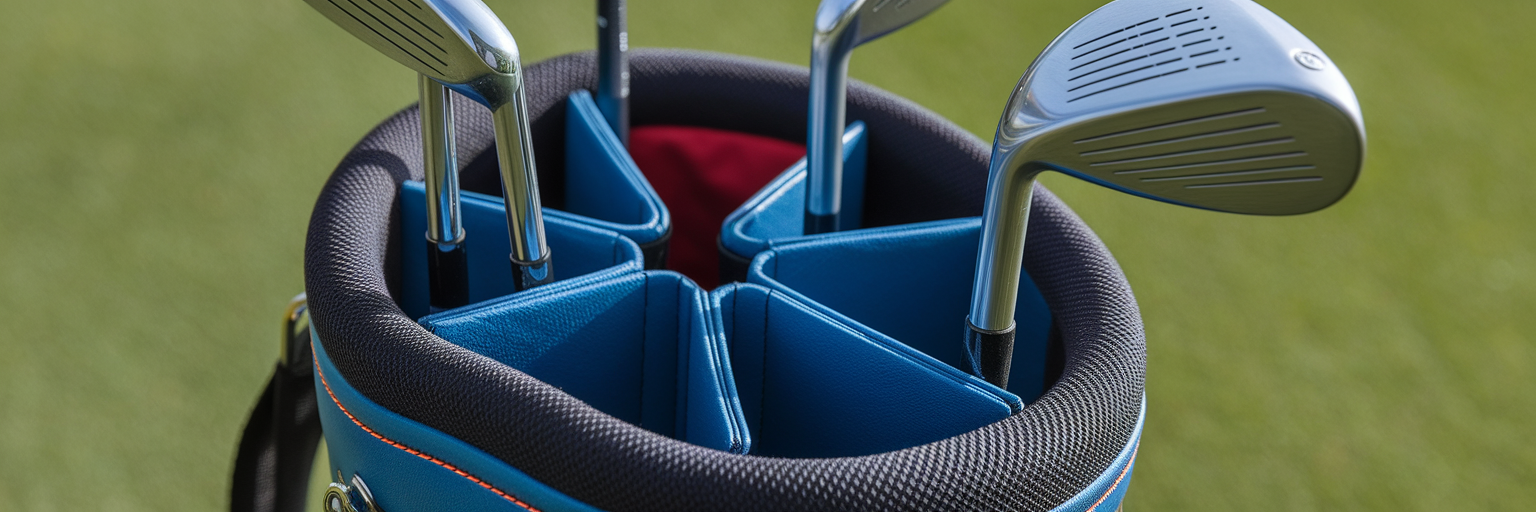
Once you have settled on a bag type, a few specific features will make your rounds more enjoyable. Paying attention to these details is a key part of this golf bag buying guide, as they separate a good bag from a frustrating one.
Weight: Lighter is Often Better
If you plan to walk at all, weight is your top priority. Every extra pound is noticeable by the end of 18 holes. The market for lightweight golf bags is huge, with some weighing under 3 pounds (about 1.4 kg). Most standard stand bags fall in the 3 to 6-pound range (1.4 to 2.7 kg), which is a great target for beginners. Cart bags can easily exceed 7 pounds (3.2 kg), which is fine for riding but a real burden to carry.
Club Dividers: Keeping Things Organized
Club dividers separate the top of your bag to prevent your clubs from tangling. You will see options ranging from 4-way to 14-way tops. While a 14-way top gives each club its own slot, it adds weight and can be overkill for a beginner. A guide from Golf Galaxy on how to choose the best golf bag notes that a 4 or 5-way top is often sufficient and lighter for new players. This simple layout provides enough organisation without the extra bulk.
Pockets: Smart Storage for Your Gear
Not all pockets are created equal. Instead of counting how many a bag has, focus on whether it has the right ones. For a beginner, these are the non-negotiables:
- Ball Pocket: A dedicated, easy-to-access pocket that can hold at least a sleeve of balls.
- Valuables Pocket: A soft, fleece-lined pocket to protect your phone, keys, and wallet from scratches.
- Insulated Drink Sleeve/Pocket: Crucial for staying hydrated during a round, keeping your water bottle cool and accessible.
- Apparel Pocket: At least one full-length pocket for a rain jacket or extra layer.
Finally, check for durable zippers and sturdy materials. A well-made bag from a reputable brand will last for years, even at an entry-level price.
Finding the Right Bag for Your Budget
Let's talk about cost. You do not need to spend a fortune to get a fantastic bag that serves you well. The key is to find the best value for your needs, not just to buy the most expensive option. The market for the best golf bags for beginners can generally be broken into three tiers.
Budget-friendly bags, typically under $150, are perfectly functional for starting out. They will have all the essential features, like a stand mechanism, decent storage, and comfortable straps. They may use slightly less premium materials, but they get the job done. The mid-range, from $150 to $250, is often the sweet spot. Here you will find bags with better materials, more durable zippers, enhanced features like insulated pockets, and more refined designs. Premium bags, priced at $250 and up, offer top-of-the-line materials, maximum storage, and brand recognition. While they are excellent, they are an unnecessary expense for someone just starting their golf journey.
Making Your Choice with Confidence
Choosing your first golf bag does not have to be overwhelming. By focusing on what truly matters, you can make a confident decision that enhances your experience on the course. Just follow these three simple steps: first, decide how you will most often play, whether walking or riding. Second, identify the essential features you need, like a lightweight design and smart pocket layout. Finally, set a realistic budget that you are comfortable with.
Remember, the perfect bag is the one that fits your game, your body, and your budget. This how to choose a golf bag guide is designed to give you the knowledge to pick a partner for your golfing adventures. The right bag will not just carry your clubs; it will carry your confidence as you learn how to play golf. Now, go find the one that feels right and get ready to enjoy the game.




 English
  German