
What Golf Ball Is Right for a Beginner?
Walking into a golf shop for the first time can feel overwhelming. You are often met with a wall of golf balls, each box promising more distance, better spin, or a softer feel. For someone just starting, it is easy to assume they are all the same. The truth is, your first golf ball choice is a simple but important step in making your learning experience more enjoyable.
Why Your First Golf Ball Choice Is Important
Before you even think about brands or prices, it helps to understand why the right ball matters. The best beginner golf balls are designed with one main goal in mind: forgiveness. When you are new to the game, not every swing will be perfect. A forgiving ball is engineered to reduce the negative effects of an off-centre hit, helping your shots fly straighter even when your contact is not ideal. This builds confidence right away.
These balls also help you gain distance. Most beginners have a slower swing, and beginner balls have a soft core that compresses easily on impact. This creates a springboard effect that adds precious yards to your drives. Finally, a softer ball provides a better feel around the greens. As you learn to chip and putt, this responsiveness helps you develop control and a sense of touch. Choosing the right ball from the start makes learning how to play golf a much less frustrating and more rewarding process.
Matching Ball Compression to Your Swing Speed

Two terms you will hear often are ‘swing speed’ and ‘compression’. Swing speed is simply how fast your clubhead is moving when it strikes the ball. Most beginners have a swing speed under 90 miles per hour. Compression refers to how much a ball squishes at impact, much like squeezing a stress ball. A low compression golf ball is softer and requires less force to compress fully.
This is exactly what a player with a slower swing needs. Using a soft ball allows you to transfer the maximum amount of energy from the club to the ball, resulting in more distance. Recent large-scale robot testing by Today's Golfer, involving over 2,232 shots, confirmed that balls in this low-compression range consistently deliver the most distance for players with swing speeds under 90 mph. Using a hard, high-compression ‘tour’ ball with a slower swing is counterproductive. It can feel like hitting a rock and will actually rob you of distance because you cannot compress it enough.
As a clear takeaway, a beginner looking for the right golf ball for slow swing speed should seek out models with a compression rating between 35 and 45. This information is usually found on the packaging or online, making your choice much simpler.
Two-Piece and Multi-Layer Ball Differences
Beyond compression, the ball’s construction plays a big role. For beginners, the best choice is almost always a two-piece ball. Its design is simple: a large, solid core built for distance and a durable outer cover. The most important feature of this construction is that it is engineered to produce low spin. Why does that matter? Less side-spin means your slices and hooks, the common misses for new players, will be less severe. The ball will have a greater tendency to fly straight.
In contrast, multi-layer balls with three, four, or even five pieces are designed for skilled players. These complex layers give advanced golfers the high spin they need to shape shots and stop the ball precisely on the green. For a beginner, that extra spin is a disadvantage, as it can exaggerate mistakes. Our conviction is clear: a two-piece, low compression golf ball is the most practical and effective choice for anyone starting their golf journey.
| Feature | Two-Piece Ball | Multi-Layer Ball (3+ Pieces) |
|---|---|---|
| Primary Design Goal | Maximize distance, reduce spin | Optimize spin control, enhance feel |
| Best For | Beginners and high-handicappers | Intermediate to advanced players |
| Spin Characteristics | Low spin for straighter flight | Higher spin for greenside control |
| Feel | Generally firmer, but soft covers available | Generally softer and more responsive |
| Typical Cost | More affordable | More expensive |
Top-Rated Golf Balls for New Players
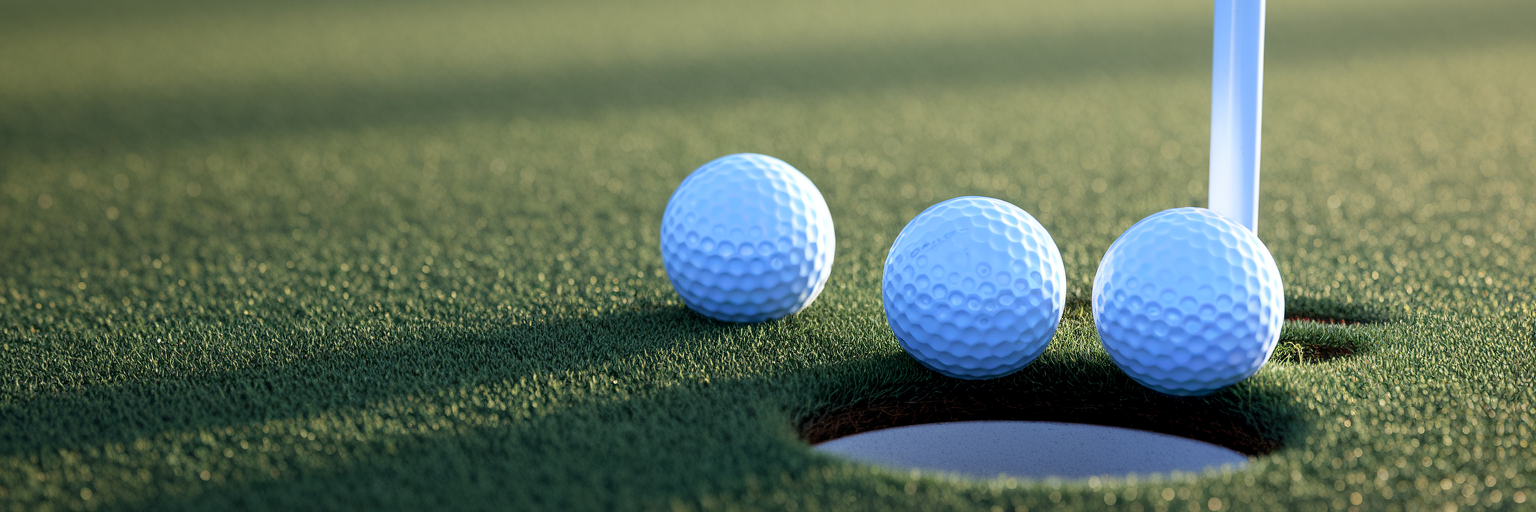
To help you narrow down your options, here are a few of the best beginner golf balls that consistently perform well and remove the guesswork from your decision. These models are praised for the exact features a new player needs.
- Callaway Supersoft: This ball is a fantastic choice for forgiveness. With an ultra-low compression rating around 38, it is exceptionally soft and easy to launch for players with slower swing speeds. Its design is focused on reducing side-spin, which helps produce straighter shots. In recent launch-monitor trials detailed by GolfersHelp, the Supersoft produced one of the lowest side-spin rates among soft-cover balls, a key reason it helps beginners hit more fairways.
- Titleist TruFeel: Known for its excellent balance of distance off the tee and a very soft feel for the short game, the TruFeel is a reliable option. It helps build confidence around the greens, where touch and control are essential. Many beginners find this ball gives them the feedback they need to improve their putting and chipping.
- Srixon Soft Feel: This is an ideal ball for a beginner who is starting to see their swing speed increase. It is designed to launch slightly higher, which can translate into more distance, but it does so without sacrificing the soft feel that is crucial for control. It is a great transitional ball as your skills progress.
Choosing any of these proven performers ensures you are using equipment designed to help you succeed, not hold you back.
Exploring Specialty Balls for Specific Needs
You may come across specialty ‘straight-flight’ balls that use unique dimple patterns to self-correct slices and hooks. While the promise of a perfectly straight shot is tempting, it is important to understand the trade-offs. These balls are often more expensive and can have a firmer, less forgiving feel on impact compared to standard beginner models. They are not a magic fix for swing flaws.
When should you consider one? A specialty ball might be a useful tool only after you have put in the time to work on your swing fundamentals but still struggle with a severe, consistent slice. For most newcomers, however, they are a niche solution to a specific problem, not a recommended starting point. The most effective long-term strategy is to master the fundamentals with a standard two-piece, low-compression ball that gives you honest feedback on your swing.
Smart Budgeting for Your Golf Ball Supply
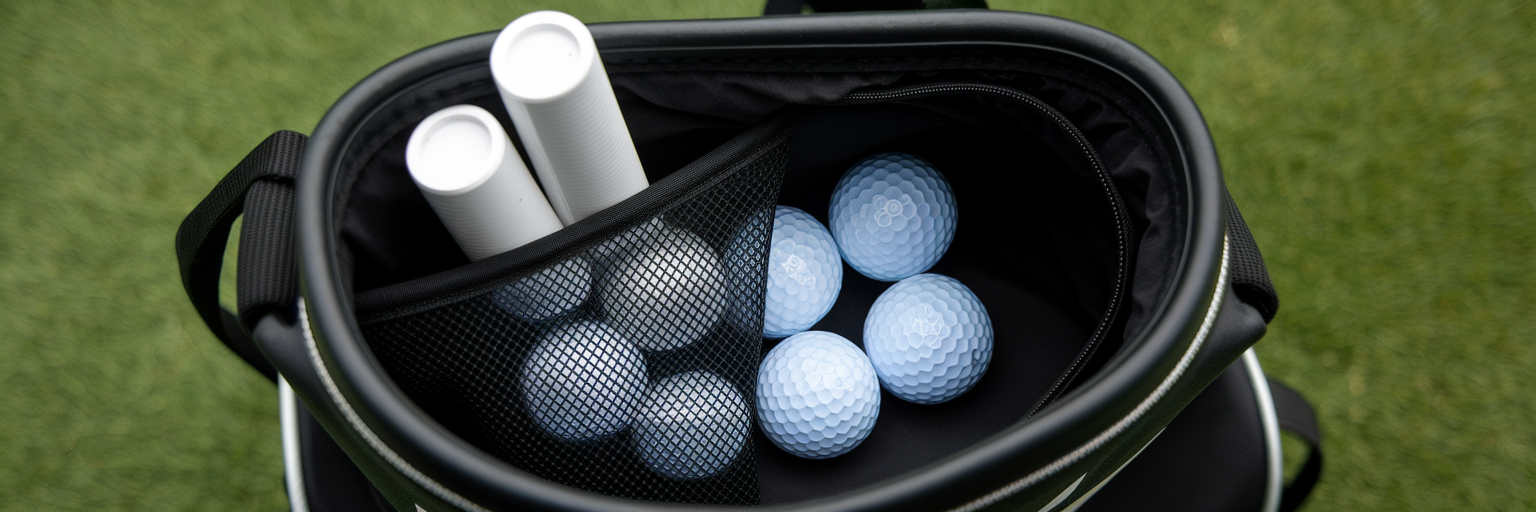
Let’s address a simple reality of learning golf: you are going to lose balls. It happens to every golfer, and it is a natural part of the learning curve, not a sign of failure. This is why choosing affordable golf balls is so important. The top beginner models are typically available for around $20 to $30 per dozen, making them a smart investment.
There is a psychological benefit here as well. When you are not worried about losing a $5 ball on every other swing, you can relax and focus on your technique. This makes the game far more enjoyable. It is also why premium ‘tour’ balls are a waste of money for beginners. Their performance benefits, like high spin rates, are only accessible to players with elite swing speeds. For a new player, you are paying for technology you cannot use.
Ultimately, knowing how to choose golf balls for beginners comes down to a simple formula: prioritize forgiveness, low compression, and affordability. This approach ensures your equipment supports your development, keeps the game fun, and makes your journey of learning how to play golf a sustainable and positive one.


 English
  German